
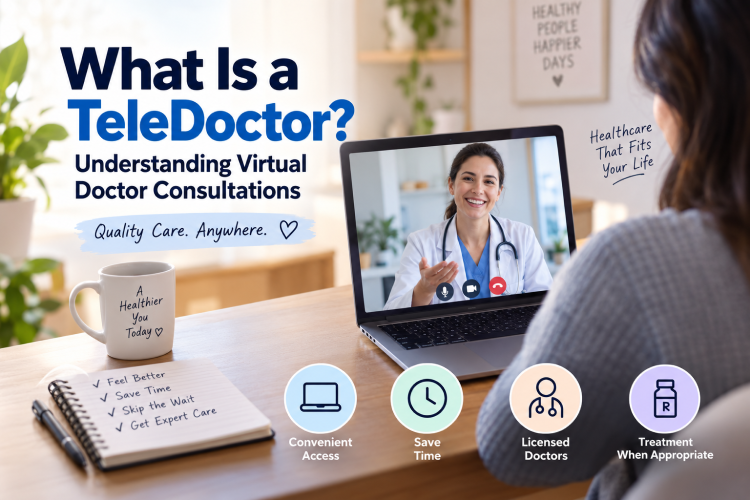
What if you could talk to a doctor without sitting in a waiting room? A TeleDoctor lets you consult a licensed healthcare provider through a phone, video call, or secure online platform. Virtual doctor consultations can help with common health concerns, prescription needs, follow-ups, and medical advice from home.
🩺 What Is A TeleDoctor?
A TeleDoctor is a healthcare provider who delivers medical care remotely using digital communication tools. Instead of visiting a clinic, you connect with a doctor through a video call, phone call, or online consultation platform. The doctor can ask about your symptoms, review your medical history, and suggest appropriate next steps. In some cases, the provider may also prescribe medication when legally and medically appropriate.
TeleDoctor services are part of telehealth and telemedicine, which have changed how many people access healthcare. They can be especially useful when you need medical guidance but do not need an in-person physical exam. 📱 You can often connect from home, work, or another private location.
💻 How Does A Virtual Doctor Consultation Work?
A virtual doctor visit usually starts when you choose a healthcare provider and schedule an appointment. You may need to enter basic information about your symptoms, medications, and health history before the visit. At the scheduled time, you connect with the doctor through a secure video platform or phone service. The doctor then discusses your concerns and determines what care may be appropriate.
The exact process can vary between telehealth providers. A typical consultation may include:
- Booking an online appointment
- Sharing your symptoms and medical history
- Speaking with a licensed healthcare professional
- Receiving medical advice or treatment recommendations
- Getting a prescription or referral when appropriate
- Arranging follow-up care if needed
The goal is simple: provide convenient medical guidance while maintaining appropriate standards of care.
📊 TeleDoctor Vs. Traditional Doctor Visits
Telehealth does not replace every type of medical care. Instead, it provides another way to access a healthcare professional when an in-person examination is not necessary. Understanding the difference can help you decide which option makes sense for your situation.
| Feature | TeleDoctor Visit | In-Person Visit |
| Location | Home or private location | Clinic or medical office |
| Travel | Usually not required | Usually required |
| Communication | Video, phone, or online | Face-to-face |
| Physical Exam | Limited | More comprehensive |
| Convenience | Often very high | Depends on appointment |
| Follow-Up | Often available online | Usually at the clinic |
For routine concerns, virtual care can save time and make healthcare easier to access. However, serious symptoms may require an in-person evaluation.
🌐 What Conditions Can A TeleDoctor Treat?
A TeleDoctor can help with many non-emergency health concerns. The provider can assess your symptoms and determine whether virtual treatment is suitable. Common examples include minor infections, allergies, skin concerns, digestive issues, and some respiratory symptoms. Virtual care may also support prescription refills and routine follow-up appointments.
Common concerns that may be suitable for online medical care include:
- Cold and flu symptoms
- Allergies
- Mild respiratory problems
- Urinary tract infection symptoms
- Skin conditions
- Headaches
- Digestive concerns
- Minor infections
- Medication questions
- Routine follow-ups
The important point is that not every condition can be safely diagnosed online. A TeleDoctor should direct you to in-person care when your symptoms require testing, examination, or urgent treatment.
🔐 Is A TeleDoctor Consultation Private And Secure?
Privacy is an important part of any healthcare experience. Reputable telehealth services should use appropriate security measures to protect your medical information. Patients should also use private spaces when discussing sensitive symptoms or personal health details. 🔒 Before booking, check how the platform handles your health information.
For U.S. patients, healthcare privacy requirements can apply to covered healthcare providers and their services. However, privacy practices can differ between platforms. Look for a provider that clearly explains its privacy policies and uses a secure system for consultations.
💊 Can A TeleDoctor Prescribe Medication?
In many situations, a TeleDoctor may prescribe medication after evaluating your condition. The doctor must determine that prescribing is medically appropriate and follow applicable federal and state rules. Some medications may require an in-person evaluation, testing, or additional safeguards. Controlled substances can also have stricter requirements.
A virtual consultation does not automatically mean you will receive a prescription. A responsible doctor will focus on the safest treatment option rather than simply providing medication. If a prescription is appropriate, the provider may send it electronically to a pharmacy you choose.
🧑⚕️ How Accurate Are Virtual Doctor Consultations?
A virtual consultation can be effective for many conditions, but its usefulness depends on the health concern. Doctors can learn a lot from your symptoms, medical history, visible signs, and conversation. Some platforms may also use remote monitoring information or patient-provided readings. Still, certain diagnoses require physical examinations or laboratory testing.
A good TeleDoctor knows the limits of online care. If your symptoms cannot be properly assessed remotely, the provider may recommend an urgent care center, primary care physician, specialist, or emergency department. That referral is a sign of responsible care, not a failure of telemedicine.
⚖️ Benefits And Limitations Of TeleDoctor Services
One major advantage of virtual healthcare is convenience. You can often avoid commuting, parking, and long waiting-room visits. This can make medical care easier for people with busy schedules or limited transportation. Telehealth may also improve access for people who live far from certain healthcare providers.
| Potential Benefits | Common Limitations |
| Convenient access | Limited physical examination |
| Less travel | Some conditions need testing |
| Flexible appointments | Internet access may be needed |
| Comfortable home setting | Not suitable for emergencies |
| Easier follow-ups | Provider availability varies |
TeleDoctor services work best when the condition can be assessed safely through remote communication. They should be viewed as an additional healthcare option, rather than a complete replacement for traditional medical care.
📱 What Should You Prepare Before An Online Doctor Visit?
A little preparation can make your virtual appointment more useful. Start by writing down your main symptoms and when they began. Include any medications, allergies, existing diagnoses, and recent changes that may be relevant. Having this information nearby can help you explain your situation clearly.
You should also prepare a quiet, private place for your appointment. Keep your phone, computer, medication bottles, and relevant health information nearby. If the doctor asks you to describe or show a visible symptom, good lighting can help.
Before your appointment, consider making a quick checklist:
- Main symptoms and their duration
- Current medications
- Known allergies
- Recent health changes
- Questions you want to ask
- Pharmacy information, if needed
These simple steps can help you get more value from your online doctor consultation.
🏥 When Should You Choose In-Person Care?
Virtual care is convenient, but there are times when an in-person visit is the better choice. Severe symptoms, serious injuries, breathing problems, or signs of a medical emergency should not be handled through a routine TeleDoctor appointment. 🚨 In an emergency, call 911 or seek emergency medical care immediately.
You may also need in-person care when your doctor needs to perform a physical examination, collect a laboratory sample, take an X-ray, or provide a procedure. Your TeleDoctor can often help determine what should happen next. The safest choice depends on your symptoms, not simply on convenience.
💡 How Much Does A Virtual Doctor Visit Cost?
The cost of a TeleDoctor visit can vary widely. Your insurance plan, provider, location, appointment type, and healthcare service can all affect the price. Some services may accept insurance, while others charge a flat cash price. Before booking, check the consultation fee and whether additional charges could apply.
Here are some factors that may affect your total cost:
| Cost Factor | Why It Matters |
| Insurance | Your plan may cover virtual visits |
| Provider | Prices differ between healthcare services |
| Visit Type | Different consultations may have different fees |
| Prescription | Medication costs are usually separate |
| Follow-Up | Additional visits may create extra charges |
Checking costs before the appointment can help you avoid surprises. If you have insurance, confirm your virtual-care benefits with your health plan.
🇺🇸 What Should You Look For In A TeleDoctor?
Choosing the right virtual healthcare provider matters. Look for a service that connects you with appropriately licensed healthcare professionals and clearly explains how consultations work. You should also be able to understand the provider’s pricing, privacy practices, appointment process, and follow-up options.
A reliable TeleDoctor service should make it easy to understand what happens after your consultation. Consider these factors:
- Provider credentials and licensing
- Secure communication technology
- Transparent pricing
- Clear prescription policies
- Follow-up care options
- Easy access to medical records
- Ability to refer you to in-person care
Convenience should never come at the expense of quality or safety. Choose a provider that treats virtual care as real healthcare, not simply a quick online transaction.
🔎 Is TeleDoctor The Same As Telemedicine?
The terms TeleDoctor, telehealth, and telemedicine are related, but they are not always identical. Telemedicine generally refers to providing clinical medical services remotely. Telehealth is a broader term that can include clinical care, health education, remote monitoring, and other healthcare services.
A TeleDoctor is usually the healthcare professional providing the remote medical consultation. In simple terms, telemedicine describes the service, while a TeleDoctor is the medical professional delivering care through that service.
🚀 Why Are Virtual Doctor Visits Becoming Popular?
People increasingly value healthcare that fits into their daily lives. A virtual doctor visit can remove some common barriers, such as travel time and long waits. It can also make follow-up appointments easier when a physical examination is not needed. For many patients, that flexibility is a major benefit.
Telehealth also gives patients another way to start a conversation about their health. Instead of ignoring a concern because getting to a clinic is difficult, someone may be able to speak with a healthcare professional online. That first step can help patients understand what care they may need next.
🧠 Key Takeaways About TeleDoctors
A TeleDoctor provides medical consultations remotely through technology such as video calls or phone services. Virtual doctor visits can be useful for many routine and non-emergency health concerns. They may offer convenience, faster access, prescription services, and follow-up care when appropriate.
However, online healthcare has limits. Some symptoms require an examination, diagnostic testing, procedures, or emergency treatment. The best approach is to use telehealth when it is clinically appropriate and switch to in-person care when your provider recommends it.
❓ Frequently Asked Questions
Can I See A Doctor Online From Home?
Yes, many healthcare providers offer online medical consultations from home. You usually connect through a secure video call or phone appointment. The doctor can assess your concerns and recommend the next step.
Can A TeleDoctor Prescribe Medication?
A TeleDoctor may prescribe medication when it is medically appropriate. Prescription rules can vary based on the medication and where you live. Some conditions require an in-person evaluation before medication can be prescribed.
Is An Online Doctor Visit Worth It?
An online doctor visit can be useful for many routine health concerns. It can save travel time and make follow-up care easier. It may not be suitable when you need a physical exam or urgent treatment.
What Can A Virtual Doctor Diagnose?
A virtual doctor can assess many common symptoms and conditions remotely. The doctor may diagnose or treat a condition when enough information is available online. Testing or an in-person examination may be needed for other health concerns.
When Should I Avoid Telehealth Care?
You should avoid routine telehealth when you have signs of a medical emergency. Severe breathing problems, serious injuries, or other emergency symptoms require immediate medical attention. When in doubt, contact emergency services or seek urgent in-person care.